Research Task - John Akomfrah and other artists
- Maderine Verrier
- Jul 21
- 10 min read
For this research task we were asked to delve into the insights from 'John Akomfrah's interview: Why History Matters', capturing his thoughts, inspirations and advice. Akomfrah is renowned for creating powerful narratives as an artist, writer, filmmaker and curator. He crafts narratives by using archival footage and non-linear methods to tell stories in unique and conventional ways. His approach offers valuable insight into creative processes, research methods, and sources of inspiration, exploring profound themes of history, culture, and memory. By blending these elements, Akomfrah creates narratives that resonate deeply, resulting in new 'germinations'.
Initial Notes
Advice -
'Don't wait'
'There are no mistakes'
'At the inception of an idea...be clear'
'Be aware of demands'
'Learn to listen to yourself, think out loud and name the germinations'
Inspirations -
Books, Cd's, Archives on images going back a century
Andrei Tarkovsky - Mirror 1975 (see further research below) 'Feels like the boarder of cinema - what the limits are'.
Maria Callas (see further research below)
Multiple Zones -
'Each has its own ethical, political aesthetic, cultural etc. demands.
Fragments come together.
When things collide in a dialectical way - synthesis is engineered and a new form is created.'
Archive is a Memory Bank -
'Connects to question of Mortality
You cant watch stuff without realising you are watching people who are gone
You can make a documentary to both capture something that going to 'die' but also because you want it to live.'
Akomfrah's work to research further -
Unfinished Conversation - 2014
Vertigo Sea - 2015
The Nine Muses - 2010
The Stuart hall project - 2013
Why does history matter?
'Connected to why the non-fictive or non fictions matter because you can tell, when the surplus of fiction has gone into the mix
How did people migrate from human to cockroach? What kind of amnesia that allows the kinds of forgetting that feeds into that hierarchy. The aversion to fiction is what keeps me (John) interested in the non-fictive and the questions of the historical which act as a counterbalance, a sort of turbulence of amnesia - a constant at sea - we swim it all the time'.
My thoughts on his advice to others starting out
I think Akomfrah's advice is just as important as the question, 'Why does history matter?' itself. The first two pieces of advice shared are 'don't wait' and 'there are no mistakes,' which both hold great value and weight. To me, this translates as dive straight in, be open and creative because that's what creating is about.
Akomfrah refers to influences which help him to reach the 'boarder' of cinema - he using books, CDs and archives of imagery and whilst this isn't direct advice, its a solid foundation of advice to look at external influences, including different forms, such as written, audio and visual.
He also states that at the 'inception of an idea be clear about the pathway'. I think this advise refers to structuring and executing the idea, having a clear method of thought, process and exploring all possible variables will assist in reaching the best possible outcome you could want for. For example when Akomfrah says, 'Each zone has its own demands - ethical, political, cultural, aesthetic etc' these are all aspects that should be considered after the inception of an idea, so that you can create that clear pathway to the result that you want.
He suggests, 'learn to listen to yourself and think out loud' this can be a significant restraint for a lot of people, myself included, however, the advice is that once you learn to trust yourself and your thoughts you will find, and therefore possess, the 'courage to name those germinations'. Its about reaching a stage of clarity in which you can bring those thoughts and ideas to fruition and accomplish what you want to. Exploring different paths, gathering influences and ideas in many different areas can be overwhelming. Without a clear structure or without the courage to achieve what you have set out to do, it can continue to be a constraint in the creative process.
Finally he mentions philosophy and that everyone should be interested in 'the deferred meaning' which can create synthesis, a new form, a new idea, which requires commitment.
Akomfrah’s advice to dive straight in and accept mistakes builds the foundation for understanding what inspires his work and the influences below give further insight on this.
What are my response to what informs Akomfrah's work
Akomfrah makes clear indications throughout the interview about the influences that have informed his work, including Maria Callas, Andrei Tarkovsky—particularly Mirror—books, CDs, archival images dating back a century, as well as ethics, politics, theories, aesthetics, and cultures. He is inspired by the history of cinema, and how this can be challenged, film makers and artists who challenge set boundaries, and create new ones. His fascination with non-fiction, mortality and memory inform his work can all be linked back to these influences. These elements that come together create what he calls 'Multiple Zones'.
The zones he navigates, will overlap and create deeper questions, in this case about memory and mortality. He refers to his archive as a 'memory bank', a place in which you can bring something to life and watch it die, therefore confronting questions about mortality, a key inspiration to inform his work. Referring back to his advice above, suggesting listening to yourself when an idea is formed, therefore suggesting that by nurturing the development of these “germinations,” you can, in a sense, become your own source of inspiration.
He further notes that he is interested in the aversion to fiction, which keeps him informed and interested in the non-fictive. In his case, aversion doesn’t imply avoidance; rather it fuels his creative process. He mentions counterbalances, and this is a clear example of how this dynamic works, demonstrating how one influence can inspire a response to another, therefor generating new ideas. These interconnected influences are what create and link multiple zones, ultimately providing a pathway to executing the germination, of the initial idea formed.
Other Artists, whose work is informed by the archive, text and narrative
Andrei Tarkovsky

Andrei Tarkovsky, a Soviet film director was known for his poetic and philosophical approach to cinema. Influentially, his father was a famous poet, a link maybe to Tarkovsky's poetic way of telling stories.
His films surrounded themes of memory, human existence and spirituality. His works, notably 'Mirror' inspired Akomfrah to challenge the boundaries of the cinema. This film specifically explores the memories of a 40 year old man on his deathbed, reminiscing on his childhood, the war and influential aspects of his life telling a story of the history of the Russian Nation. It is a semi-autobiographical film depicting childhood memories and dreams, and how the past and present merge, including a recital of his fathers poem 'White Day' (Andrei Tarkovsky Official Website, n.d.). As written by Tarkovsky himself, "For me film - is a way to reach the truth and I am trying to do it to the fullest extent of what I am capable of. I am profoundly convinced that the process of creating a film does not end after it was finally made ready for the movie theatre. The act of creation takes place in the auditorium at the time of watching the film. Therefore, the viewer for me is neither my consumer, or a judge, but a co-creator, co-author." (Andrei Tarkovsky Official Website, n.d.)
Maria Callas

Maria Callas was one of the greatest and most celebrated opera singers of the 20th century. Not only was she known for her Bel canto roles, but for her intensely emotive acting, transcending the usual boundaries of classical music. Callas revolutionised vocal performances with emotional and dramatical expressions which made her one of the most successful and controversial singers of that genre. Her unique way of storytelling, and eventful life has inspired books, documentaries, and films, including the biopic "Callas Forever" and Terrence McNally's very successful play "Master Class", and finally a new film, starring Angelina Jolie, "Maria". Callas influenced the world in many ways, with an incredible vocal range, emotional acting, challenging traditional singing techniques, teaching in person and creating educational tools through recordings, her personal life and career has inspired filmmakers, singers and artists around the globe and continues to do so. Callas' courage to redefine what it meant to perform is still celebrated as a new way of presenting a narrative.
Whilst researching Maria Callas I watched, Maria Callas: The Final Act - by the BBC.
The initial depiction of Callas is that her life was a tragedy due to a failed romantic relationship, however almost instantaneously, it reveals that after a lifetime of success as an opera singer, she starts to withdraw from performances and states she was close to a mental breakdown, due to loosing the voice. The documentary pulls of archived images, footage and recordings, including her songs, instrumentals and interviews. The documentary is informative of her life from childhood, including anecdotes and personal photo albums introducing you to an intimate viewfinder of her life. As Callas' story unfolds, we are introduced to her influence on style, fashion and beauty standards. Finally the documentary explores the shift in her style of performance as a singer, to a singer who also acts and her ability to evoke emotion. It is a profound watch, and highly recommended, especially in regards to what might have influenced many artists, specifically Akomfrah into creating such works. It is also very encouraging as to seeing the volume of accessible archives which can be used and found of peoples lives, careers, opinions and the corresponding variables, such as society and the changes in times, aesthetics etc.
Laura Belém
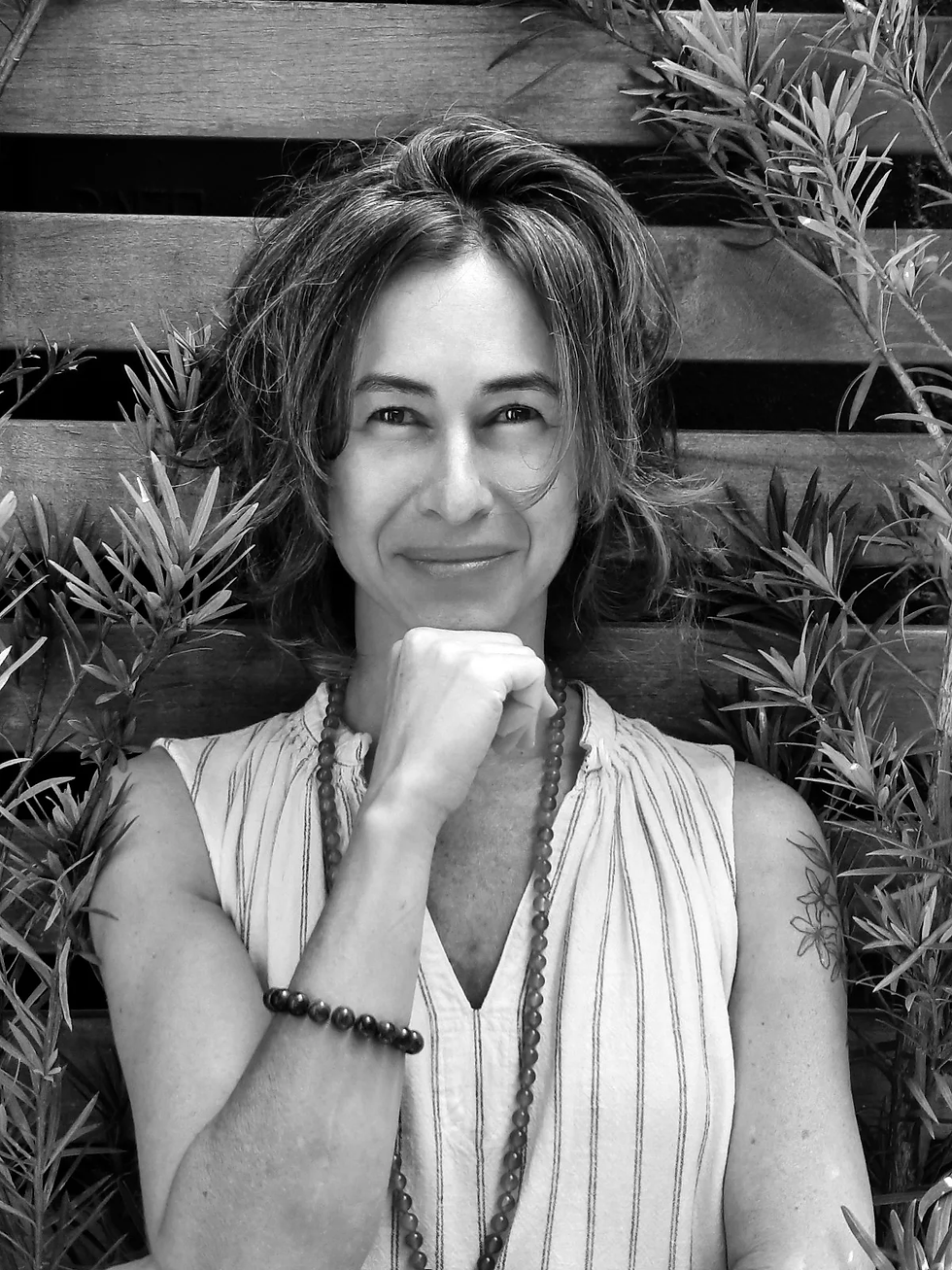
Belém is a Brazilian artist who focuses on using different elements to redefine surroundings. She works with a range of mediums, including audio art, sculpture, photography and installation creating conceptual zones (Belem, n.d.). Her narratives often surround memory, displacement and space and time as a dialogue. I was instantly captivated by Belém's work The [...] Element,
and after reading about her approach yo working with different zones and mediums, I was intrigued to see how this would manifest. Watching a video on The [...] Element (2019), I was struck by the intricate layers used to transport the audience to a different environment. The installation itself creates a dialogue with the locations history, memories, and poetry illustrating how these elements respond to one another. I was particularly fascinated by the use of water as a theme, Belém employed an 100 year old water pump as the centre piece to this installation, bought to life with the use of auditory simulations. These include her own recordings of the Tauber River, birdsong, insects, and flowing water, masterfully combined with musical instruments.
Through this, the installation combines history and healing, the new and the old, the constant and the changing. All elements of the installation permeates the notion of life and its predecessor. The video immersed me in an experience, that connected to the past and what used to be, while rooted in the present. This was all heightened by what I felt was a particularly creative selection of audio recordings. Belém included a recital of a poem, that beautifully bridged history and the present, enhancing the experience by depicting a current presence on-site. Notably, while there was the illusion of someone being there in the present (in contrast to the visually bare and stationary site), there was also the illusion of historical presences, including the motions of the water pump in use, people in the baths and birdsong. This transient interplay of past and present transformed the space from a physical landscape to an inner and reflective landscape.
Michiel Huijben

Michiel Huijben is an artist, whose work centres around architecture, he explores built environments revealing hidden stories and creating new possibilities through writing, performances and installations. Upon researching Huijben, I considered the works in which he has produced to be somewhat removed from those above. Building Histories - Act One (2020) was a request from an institution to conduct research into the buildings history, the results are not something that I anticipated however I have found an appreciation for the somewhat simplified manner in which the history of the building has been bought to the attention of viewers. The image above is from the installation of Part One, in which Huijben creates 3D sculptures from the buildings exterior, finding traces of human decision making during the 19th Century, during a 'debate around an 'official' nation style as a backdrop' occurred (Huijben, n.d.). Initially, bringing the façade of the building in, brings the history of the building to the audience in a close an intimate manner, allows them to consider the thought process behind each detail. Additionally, bringing the exterior indoors welcomes the history to be seen from a new perspective, up close and contrastingly with new and modern architecture, and examples of other 19th century architecture. The sculptures can be regarded as their own characters and voices in the debate over architectural style at the time.
Jade Monserrat

Jade Monserrat is a research-led artist and writer. She creates visual and live artworks exploring race, gender, class and the vulnerabilities of bodies, and the importance of recording and preserving history using mediums such as performances, drawings, paintings, films, installations, sculptures, prints and texts. She focuses on sensory qualities of language and challenges structures in the care industries combined often in the context of life in rural communities with the above mentioned elements of race etc. Monserrat's work frequently engages with archives—both personal and historical—while also creating new archives through curated environments that encourage participants to explore these themes. In Instituting Care, 2019 she used large charcoal drawings made directly onto walls, offering fragments of reflections of her experiences through education and working as an artist in the UK. The drawings comprised of quotations and response to texts on decolonisation by writers such as Frank Fanon, Audre Lorde and Stuart Hall. By doing so, she raises questions about education: Who does it serve? Who should it serve? How is individual and collective creativity valued? And what could a care-centred approach to education look like? The act of drawing quotes directly onto walls not only questions educational structures but also explores the vulnerability of space and body. It prompts the viewer to consider who the space serves—the artist or the audience—emphasizing the dynamic relationship between archives, education, and care.
Sophie Calle

Artist Sophie Calle draws on personal experiences and storytelling, blending both texts, photographs and objects.
In "Exquisite Pain" (2004) Calle documents her experience of heartbreak and pain using archives, personal narratives and interviews with friends and family's about their own suffering. The installation juxtaposes her journey through healing with other people's accounts of their own suffering creating a dialogue between personal and collective experiences.
This work resonates deeply with discussions and reflections on trauma and recovery, for me, it highlights how art can hold both personal vulnerability (a zone) and universal emotion (a zone) at the same time.
References -
Tate (2023) Why History Matters: Interview with John Akomfrah [Online]. YouTube. Available at: https://www.youtube.com/example [Accessed July 2025].
Andrei Tarkovsky Official Website (n.d.) Biography of Andrei Tarkovsky. Available at: https://andrei-tarkovsky.com/bio.html [Accessed July 2025].
Andrei Tarkovsky Official Website (n.d.) Home Page. Available at: https://andrei-tarkovsky.com/index.html [Accessed July 2025].
BBC (n.d.) BBC Programme: M0026D5X. Available at: https://www.bbc.co.uk/programmes/m0026d5x [Accessed July 2025].
The Royal Institution (2021) How language shapes the way we think | Lera Boroditsky. Available at: https://www.youtube.com/watch?v=06ZvB5i8FgU [Accessed July 2025].
Belem, L. (n.d.) O Elemento / The Element. Available at: https://laurabelem.com.br/O-Elemento-The-Element [Accessed July 2025].
Huijben, M. (n.d.) Michiel Huijben Official Website. Available at: https://www.michielhuijben.nl/ [Accessed July 2025].
Bosse & Baum. (n.d.). Jade Montserrat. Available at: https://www.bosseandbaum.com/artists/jade-montserrat/ [Accessed July 2025].
Paula Cooper Gallery Website (n.d) Sophie Calle Exquisite Pain. Available at: https://www.paulacoopergallery.com/exhibitions/sophie-calle4#tab:slideshow

Comments